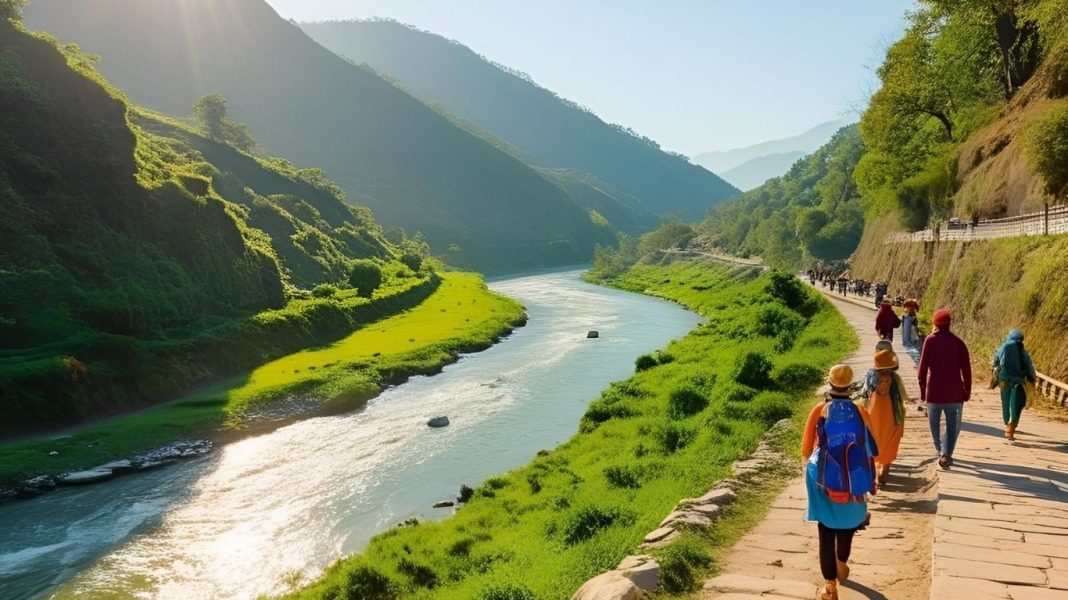

India is a historical, mythological, and spiritually enlightened country. The journey from Haridwar to Rishikesh is particularly noteworthy for its remarkable natural beauty and deep spiritual significance among the numerous pilgrimages and cultural circuits the nation offers. These two holy cities, which are tucked away in the Himalayan foothills, provide a special fusion of adventure, yoga, vibrant river culture, and ancient customs. Whether you are a tourist, pilgrim, backpacker, or spiritual seeker, this trip is sure to leave you with priceless memories.
An Overview of Haridwar
One of the seven holiest sites in Hinduism (Sapta Puri) is Haridwar, which is situated in the northern Indian state of Uttarakhand. With good cause, the name “Haridwar” literally means “Gateway to God.” Haridwar, which lies on the banks of the Ganga, is the point at which the holy river emerges from the Himalayas onto the Indo-Gangetic plains.
The Ganga Aarti at Har Ki Pauri, a captivating nighttime ritual that includes chants, flaming lamps, and floating diyas, is the city’s most famous attraction. This daily show, which represents purification and submission to supernatural forces, draws thousands of devotees. Every twelve years, the big Kumbh Mela is hosted in four different places, including Haridwar.
Rishikesh: The World’s Yoga Capital
Rishikesh is located roughly 20 kilometers north of Haridwar and is frequently referred to as the “Yoga Capital of the World.” Rishikesh provides a fusion of spiritual and contemporary experiences, whereas Haridwar exudes a more conventional religious atmosphere. Rishikesh, which is well-known for its ashrams, meditation centers, and holistic wellness retreats, has grown to become a major destination for yoga devotees worldwide.
When The Beatles visited the Maharishi Mahesh Yogi’s Ashram in the late 1960s, the city became well-known throughout the world. Since then, Rishikesh has grown to be a popular travel destination for both Indian and Western spiritual seekers. It is ideal for thrill-seekers because it provides a range of adventure sports, such as trekking, bungee jumping, and white-water rafting.
How to Travel and the Distance
Depending on the route you choose, Haridwar and Rishikesh are roughly 20 to 25 kilometers (12 to 15 miles) apart. Depending on traffic conditions and your choice of transportation, the trip can take anything from thirty minutes to an hour.
There are several ways to travel:
By Road: Between the two cities, regular buses, shared cars, and private taxis are available.
By Train: Although there are a few short-distance trains operating, their erratic schedules make them less popular.
By Bike or Scooter: Renting a two-wheeler can be an exciting method for people who enjoy riding to take in the landscape.
The brief journey between the two villages is immensely picturesque and calming as it passes through hills and riverbank scenery with expansive views.
Spiritual Importance and Common Tradition
In Hindu mythology, Haridwar and Rishikesh, both located on the banks of the Ganges, are very spiritually significant. While Rishikesh is where sages conducted penance for eons in search of enlightenment, Haridwar is thought to be the location where King Bhagirath brought the Ganga river down from the skies.
Devotees travel from all across India to see temples like Haridwar’s Mansa Devi, Chandi Devi, and Bharat Mata Mandir. The Neelkanth Mahadev Temple, which is devoted to Lord Shiva, as well as a number of famous ghats and suspension bridges, including Ram Jhula and Laxman Jhula, are located in Rishikesh.
Both towns are connected by a spiritual undercurrent that transcends geography and is rooted in a common cultural and devotional past.
Destinations to See Along the Way
Even though the trip is brief, there are a number of noteworthy stops along the Haridwar to Rishikesh route that might improve the experience:
En way is Rajaji National Park, a wildlife lover’s paradise. See tigers, elephants, and more than 400 bird species.
An important spiritual center founded on the Gayatri ideology is Shantikunj Ashram.
Just outside of Haridwar is Patanjali Yogpeeth, a significant Ayurvedic and yoga center founded by Baba Ramdev.
These places offer chances for leisure study as well as spiritual development.
Experiences with Culture
The trip from Haridwar to Rishikesh is a cultural voyage as well as a physical one. Despite their spiritual alignment, the two cities have distinct feel. More traditional, Haridwar places a strong focus on rituals and temple visits. Temple bells, Sanskrit chants, and a festive mood permeate the city.
Although still spiritual, Rishikesh has a more laid-back and global perspective. There will probably be signage in several languages, fusion cafes with relaxing music, and yoga practitioners from all over the world. Spiritual talks, yoga on the ghats, and street entertainment all contribute to the city’s rich cultural diversity.
Activities and Adventure
One of the best places in India for adventure travel is Rishikesh. Following their peaceful and ceremonial stay in Haridwar, many tourists engage in thrilling pursuits like:
Rafting in white water on the Ganges
Bungee jumping from the tallest platform in India
Flying Fox and Giant Swing
Trekking through forests and mountain riding
These strictly controlled activities offer an exciting counterpoint to the area’s quiet and spiritual elements.
Retreats for Yoga and Wellbeing
You’re in for a treat if you’re traveling from Haridwar to Rishikesh for spiritual development. Many ashrams provide residential courses in yoga, pranayama, Ayurveda, and meditation, including Parmarth Niketan, Sivananda Ashram, and Phool Chatti Ashram.
Serious practitioners from all over the world enroll in these programs, which last anywhere from a few days to several months. It is a great spot for a wellness break because it offers organic food, herbal remedies, and tranquil surroundings.
Accommodations and Regional Food
Both cities include a variety of lodging options, ranging from upscale resorts and spa centers to affordable guesthouses and dharamshalas. While Rishikesh is mainly geared toward foreign visitors, yogis, and spiritual tourists, Haridwar offers more accommodations for pilgrims.
Try the Kachori and Aloo Puri in Haridwar’s busy markets to experience the local food. Since Rishikesh is a vegetarian city by law, eateries like Ayurpak, Little Buddha Café, and The Beatles Café serve inventive and healthful vegetarian fare.
The Ideal Time to Go
Winter and spring (October to March) are the finest seasons to travel from Haridwar to Rishikesh because of the lovely weather that is perfect for outdoor activities and sightseeing. Summers can be hot, and the monsoon season is beautiful, but it also brings slick roads and the possibility of landslides in the nearby hilly regions.
Tips for Travel and Safety
Despite the fact that the area is generally safe, bear the following travel advice in mind:
Steer clear of traveling between the two cities late at night, particularly during the monsoon season.
Bring snacks and bottled water for the trip.
Wear modest clothing, particularly when you’re at an ashram or temple.
Honor regional traditions and religious beliefs.
Cultural and Environmental Sensitivity
Particularly around the riverbanks, Haridwar and Rishikesh are plastic-free zones. It is advised that visitors travel responsibly by not littering, not contaminating the river, and, if at all feasible, taking part in clean-up campaigns.
Rapid growth in spiritual tourism has a negative impact on local ecosystems even though it generates income. Reducing your environmental impact can be achieved by staying in sustainable lodging and supporting eco-friendly companies.
Conclusion: A Soul’s Journey
A wealth of cultural, spiritual, and natural splendor can be found in the brief few kilometers that separate Haridwar and Rishikesh. This voyage provides everything, whether you’re searching for adventure, enlightenment, or just tranquility. It’s a spiritual as well as spatially transformative journey.
The journey is more than just a commute; it’s a spiritual journey, a mental retreat, and a celebration of life’s more profound aspects, from the heavenly chants of Haridwar to the yoga mats of Rishikesh.