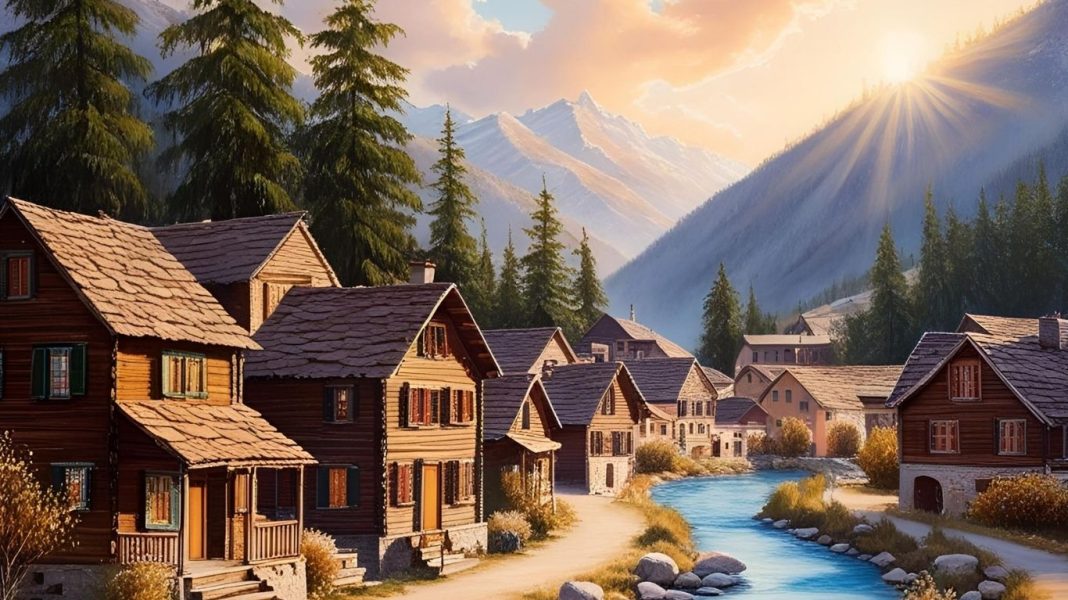

One of India’s most well-liked and stunning tourism spots is Kullu-Manali, which is nestled in the tranquil Himachal Pradesh hills. Everyone may find something to enjoy in the twin cities of Kullu and Manali, whether they are honeymooners, nature lovers, thrill-seekers, or spiritual travelers. They provide an escape into the arms of the spectacular Himalayas and are the ideal combination of culture, adventure, peace, and natural beauty.
The Himalayan Gateway: An Overview of Kullu and Manali
Despite being frequently referred to jointly, Kullu and Manali are two distinct towns that are roughly 40 kilometers apart. Often referred to as the “Valley of Gods,” Kullu is situated on the banks of the Beas River and is encircled by snow-capped peaks, apple orchards, and lush woods. In contrast, Manali, which is higher up, is more well-known for its snow, adventure sports, and colonial beauty.
A pleasure in and of itself is the picturesque trip from Kullu to Manali, which follows winding mountain roads and the meandering Beas. In Hindu culture, the area has profound theological and mythological significance in addition to being a popular tourist destination.
Getting There: Connectivity and Travel
Road, air, and rail connections between Kullu and Manali are excellent. About 10 kilometers from Kullu, the closest airport is Bhuntar Airport, which has flights from Chandigarh and Delhi. The majority of visitors prefer to go by road, either from Chandigarh (about 310 km) or Delhi (about 550 km). Volvo buses are a common choice for overnight travel.
With winding roads, babbling rivers, and pine-covered mountains providing a continual visual feast, the trip to Kullu-Manali is picturesque. Although there are no trains that run straight to Manali, Joginder Nagar, which is around 145 kilometers distant, is the closest train station.
Manali: Himachal Pradesh’s Crown Jewel
For many tourists, Manali is more than just a hill station; it’s an emotion. It is renowned for its snowy vistas, alpine trees, and the ideal fusion of Indian tradition with Western living, and it is situated at an elevation of 2,050 meters.
Every year, hundreds of tourists go to locations like Old Manali, Rohtang Pass, Hadimba Temple, and Solang Valley. Manali never lets you down, whether you want to play in the snow, visit historic temples for blessings, or just enjoy hot chocolate at a quaint café with a view of the Himalayas.
Rohtang Pass and the Solang Valley: Adventure Awaits
For adventure sports, Solang Valley, which is around 14 kilometers from Manali, is the preferred location. Solang changes with the seasons, offering summertime paragliding and zorbing as well as wintertime skiing and snowboarding. Photographers and nature enthusiasts alike adore this cable car journey, which offers sweeping vistas of the valley.
At 3,978 meters above sea level, the Rohtang Pass is located further up and is open from May to November. With glaciers, waterfalls, and towering cliffs, it provides breathtaking scenery and an almost lunar setting. The drive across snow-lined roads is an experience in and of itself, and permits are needed to enter.
Kullu: A Place of Spiritual Calm and Gods
Kullu has its own appeal, even though Manali might take center stage. Because it is less marketed, it is perfect for people seeking isolation and tranquility. The Dussehra celebrations in Kullu are well-known and draw tourists from all over the world.
Here, the Vaishno Devi Temple, Bijli Mahadev Temple, and Raghunath Temple are highly esteemed. Trekking and ecotourism in the UNESCO World Heritage Site Great Himalayan National Park allow tourists to experience nature in its most unadulterated state.
Sports for Adventure in Kullu-Manali
Adventure seekers will find paradise in the area. The Beas River is perfect for white-water rafting in addition to skiing and paragliding, particularly in the area between Pirdi and Jhiri. Other popular activities include rock climbing, river crossing, mountain riding, and trekking.
Enchanting paths via mountain ridges and alpine meadows may be found on trekking routes like Chandrakhani Pass, Bhrigu Lake, and Hampta Pass. Every adventurous activity gains a dramatic edge from the Himalayan backdrop.
Café Culture and Old Manali
An whole distinct world exists in Old Manali. Known for its bohemian cafés, cobbled walkways, and relaxed atmosphere, this area of town draws a younger clientele that includes digital nomads and foreign tourists.
Popular hangouts include Café 1947, The Lazy Dog, and Dylan’s Toasted and Roasted, which serve anything from organic smoothies to Israeli platters. This is the ideal place to relax after a strenuous hike or hectic tourist day because of the live music, art walls, and mountain vistas.
Festivals and Cultural Diversity
Deeply ingrained in Himachali tradition, Kullu-Manali is more than just a place to explore nature and adventure. Warm and welcoming, the inhabitants celebrate many festivals with lively music, traditional dances, and communal feasts.
During the week-long Kullu Dussehra celebration, gods from all around the valley come together in a beautiful procession. Because of their distinctive customs, the Phagli Festival in Malana and the Doongri Festival in Manali are also worthwhile visits.
Himachali delicacies and regional cuisine
One must sample the Himachali food when at Kullu-Manali. Try foods such as:
Sidu: A kind of spicy filling-filled steamed wheat bread.
Chha Gosht: A thick yogurt gravy made with lamb.
Tudkiya Bhath: A lentil and yogurt-based Himachali pulao dish.
Mittha: A dish of sweet rice topped with almonds and raisins.
Enjoy handcrafted jams and pickles, as well as locally produced apple cider, which you can even bring home as mementos.
Purchasing in the Hills
Kullu-Manali has a wide range of souvenirs, from woodwork, silver jewelry, and local handicrafts to woolen shawls and hand-knitted socks. Both towns have great places to shop, including Mall Road, Old Manali Street, and the Tibetan Market.
Kullu is particularly well-known for its handwoven goods, especially the well-known shawls with their vivid colors and elaborate geometric designs. They create classy presents and enduring mementos of your journey.
The ideal time to visit and the weather
The ideal time to travel to Kullu-Manali will depend on your goals:
The pleasant weather during the summer (March to June) is perfect for adventure sports and sightseeing.
Travel may be hampered by landslides during the monsoon season (July to September), although there is lush flora.
Winter (October to February): A beautiful snowy scenery, snowfall, and skiing.
Trekkers and campers would prefer May over June, while snow lovers should schedule their trips between December and February.
Traveling responsibly and sustainably
In Kullu-Manali, there is a growing emphasis on eco-friendly travel due to the growth in tourism. Visitors are urged to:
Steer clear of plastic.
Respect the environment and local culture.
Select environmentally friendly lodging.
Encourage local companies and artists.
Everyone who travels to the Himalayas must take responsibility and care for the delicate nature.
In conclusion, a soul-stirring journey
Kullu-Manali is more than just a place to visit; it’s an emotional and soul-stirring experience. You’ll want to go back time and time again because of the tall deodars, the Beas River’s steady flow, the aroma of pine in the air, and the friendliness of the locals.
Kullu-Manali provides moments of happiness, wonder, and tranquility, whether you’re standing atop Rohtang Pass, meditating in a forest ashram, or enjoying chai as snowflakes fall. It is a place where spirituality and adventure coexist, and each visitor can discover their own unique form of enchantment.